22 Stylish Small Dining Room Decor Ideas That Maximize Space
Small dining rooms are tricky—they need to feel warm and welcoming but not cramped or cluttered.
I’ve lived in a home where my dining room was barely big enough for four chairs, and yet, with a few tweaks, it became the heart of the house.
The truth is, small dining spaces are not a limitation—they’re an opportunity to be clever, creative, and stylish.
1. Choose a Round Table for Better Flow
A round dining table works wonders in a small space. Unlike square or rectangular tables, it doesn’t eat up corners and allows people to slide in more easily. Interior designers often recommend round tables under 48 inches for compact spaces because they maximize seating without feeling bulky.
Think of it like a campfire—everyone feels included, and the flow of conversation is better too. If you’ve ever struggled with elbows clashing at a rectangular table in a tight room, you’ll instantly notice the difference.
2. Use Benches Instead of Chairs
Chairs are wonderful, but they take up more visual and physical space. Benches tuck neatly under the table when not in use, freeing up precious square footage. Plus, they seat more people without needing extra room for chair legs and backs.
I once swapped out four bulky chairs for a sleek bench, and suddenly my dining nook felt twice as big. As a bonus, benches give a casual, communal vibe that makes meals feel cozier.
3. Install a Built-In Banquette
If your dining room hugs a wall, a built-in banquette (a cushioned bench attached to the wall) is a game-changer. Not only does it save space, but it also creates hidden storage underneath for table linens, seasonal décor, or even that waffle maker you use twice a year.
Restaurants use banquettes for a reason—they’re compact, comfortable, and stylish. Adding cushions and pillows can also turn your dining room into a lounge-worthy spot.
4. Go Vertical With Shelving
When floor space is limited, look up. Adding slim shelves or floating storage on the walls frees the floor while still keeping essentials accessible. You can display dinnerware, plants, or even a few cookbooks to add character.
According to the National Kitchen and Bath Association, 63% of homeowners now incorporate vertical storage to maximize smaller dining and kitchen spaces. That tells you it’s not just trendy—it’s practical.
5. Embrace Mirrors for Depth
A classic trick: mirrors make small rooms look bigger. Place a large mirror on one wall of your dining room, and suddenly it feels like your space doubled. Not only does it reflect light, but it also creates the illusion of an open layout.
I once added a vintage gold-framed mirror above a banquette, and dinner guests always assumed the room extended further than it actually did.
6. Opt for Light and Neutral Colors
Dark colors can shrink a room, while light tones—whites, creams, light grays—open it up. This doesn’t mean your dining room has to be boring. You can add pops of color through seat cushions, artwork, or table décor.
Design studies show that light walls reflect up to 80% more light compared to darker tones, which is crucial in compact spaces.
7. Choose a Glass or Lucite Table
When space feels tight, a glass dining table creates a sense of openness. Because you can see through it, it doesn’t block visual flow. Lucite or acrylic chairs work the same way—they almost disappear while still offering seating.
This trick is like wearing a pair of invisible shoes—they still do the job, but you barely notice them.
8. Add a Statement Light Fixture
You might think large light fixtures are a no-go in small spaces, but the opposite is true. A statement chandelier or pendant light draws the eye upward, making the room feel taller and more balanced.
The key is scale: keep it proportional to your table. For example, a fixture about 12 inches smaller in diameter than your table works beautifully.
9. Use Folding or Extendable Tables
If you rarely entertain but want flexibility, consider a drop-leaf table or an extendable table. Day-to-day, it stays compact, but when guests arrive, it expands.
This setup saved me during a Thanksgiving dinner in a tiny apartment—I went from seating four to fitting eight people comfortably, all thanks to a clever extendable design.
10. Keep the Floor Clear With Rugs That Fit
A rug can anchor a dining space, but in small rooms, size is everything. Choose a rug that’s large enough for chairs to slide in and out without catching. Avoid oversized rugs that overwhelm the floor.
Go for flatweave rugs—they’re slim, stylish, and easy to clean after spills.
11. Create Visual Space With Open-Back Chairs
Instead of chunky chairs with solid backs, opt for open-back or slim-framed chairs. They let light flow through, which tricks the eye into seeing more space.
It’s like the difference between a heavy winter coat and a breezy cardigan—both serve their purpose, but one feels far less bulky.
12. Use Wall-Mounted Lighting
Table lamps or bulky floor lamps eat space. Instead, install wall sconces or pendant lights. Not only do they free up surfaces, but they also create a more sophisticated, layered lighting design.
According to Houzz’s 2024 Home Trends Study, layered lighting is one of the top-requested design features for small dining and kitchen areas.
13. Add Sliding or Pocket Doors
Traditional swinging doors need clearance, which wastes space. Sliding or pocket doors solve that problem while adding sleek, modern appeal.
If your dining room connects to a kitchen or patio, switching to sliding doors can free up several square feet instantly.
14. Incorporate Multipurpose Furniture
In small spaces, furniture should work harder. Think of a storage sideboard that doubles as a bar cart or a dining table that also functions as a work desk.
This approach is especially useful for apartment dwellers where the dining area might also serve as an office.
15. Add Plants for Freshness
Greenery adds life without taking up much space. A small potted plant on the table or a hanging plant from the ceiling adds vibrancy without cluttering surfaces.
Studies show that indoor plants can reduce stress by up to 37%—and honestly, what’s better than eating dinner surrounded by a calming vibe?
16. Keep It Minimalist With Decor
A small dining room can quickly become overwhelming with too many decorative pieces. Stick to a minimalist approach: one statement centerpiece, one wall art, and clean-lined furniture.
Minimalism doesn’t mean boring—it means every piece matters.
17. Use Slim Storage Cabinets
Instead of bulky china cabinets, choose slim vertical cabinets or wall-mounted shelves. IKEA, for instance, has reported a 20% increase in sales of slim-profile furniture over the last few years—because people are learning that small rooms don’t need big furniture.
18. Layer With Textures
Even if your space is small, it shouldn’t feel flat. Add textures through a linen tablecloth, velvet cushions, or a rattan pendant light. Layered textures make the room cozy and engaging without needing more square footage.
It’s like seasoning food—you don’t need more portions, just better flavors.
19. Use Artwork Strategically
One large piece of art can make a small dining room feel intentional and stylish. Avoid cluttering walls with too many small frames. A single bold piece creates a focal point without overwhelming the room.
Think of it as having one good story at dinner—it’s better than ten half-told ones.
20. Play With Symmetry
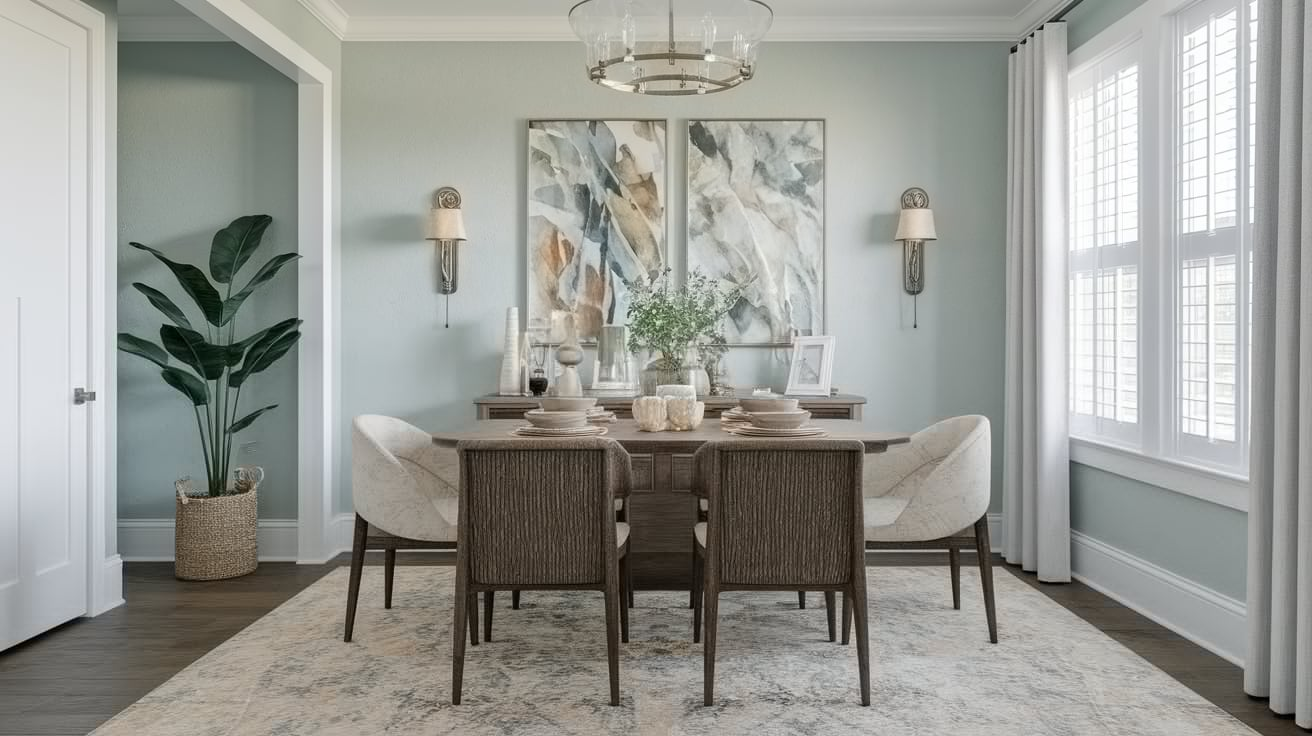
Even in small spaces, symmetry creates order. Two matching chairs, two pendant lights, or two framed artworks can make the space feel structured and balanced.
This trick makes the room feel intentional rather than “squeezed in.”
21. Choose Compact Bar Carts or Trolleys
If you love entertaining, but don’t have room for a full bar cabinet, a slim bar cart is your best friend. It keeps drinks accessible but can be rolled away when not in use.
It’s functional, chic, and a conversation starter.
22. Keep Windows Uncovered (or Lightly Dressed)
Heavy drapes can weigh down a room. Instead, choose sheer curtains or simple blinds. Natural light instantly enlarges a space and makes it feel airy.
If privacy is a concern, frosted films or light linen shades work without cutting off sunlight.
Conclusion
A small dining room doesn’t have to feel cramped—it can be the most charming space in your home if styled thoughtfully. The secret lies in choosing the right furniture, colors, lighting, and layout to make the room feel larger than it is.
From clever seating options like benches and banquettes to smart tricks with mirrors, colors, and lighting, every choice matters. Remember, small spaces force us to be intentional—and that’s what often makes them the most stylish rooms of all.
So whether you’re hosting a dinner for two or squeezing in six around a round table, your small dining room can feel just as elegant, functional, and inviting as a grand one.