22 Serene Japandi Bedroom Oasis Ideas That Will Transform Your Space into a Zen Retreat!
The bedroom is where your day begins and ends—it’s not just four walls and a bed, it’s your sanctuary. Now imagine combining the calm minimalism of Japanese interiors with the warm, cozy vibe of Scandinavian design.
That’s what Japandi style is all about. It’s sleek yet soft, functional yet comforting, minimal yet warm—a design approach that balances opposites like yin and yang.
If you’ve ever felt your bedroom was more stressful than soothing, these Japandi bedroom ideas will help you turn it into a Zen retreat where you can breathe, relax, and recharge.
1. Low Platform Beds for Minimal Serenity
In Japandi interiors, low platform beds are the star. The closer you sleep to the ground, the calmer your space feels. Think of it like anchoring yourself in nature—rooted and grounded.
Japanese homes often feature tatami-style sleeping arrangements, while Scandinavian spaces lean toward simplicity.
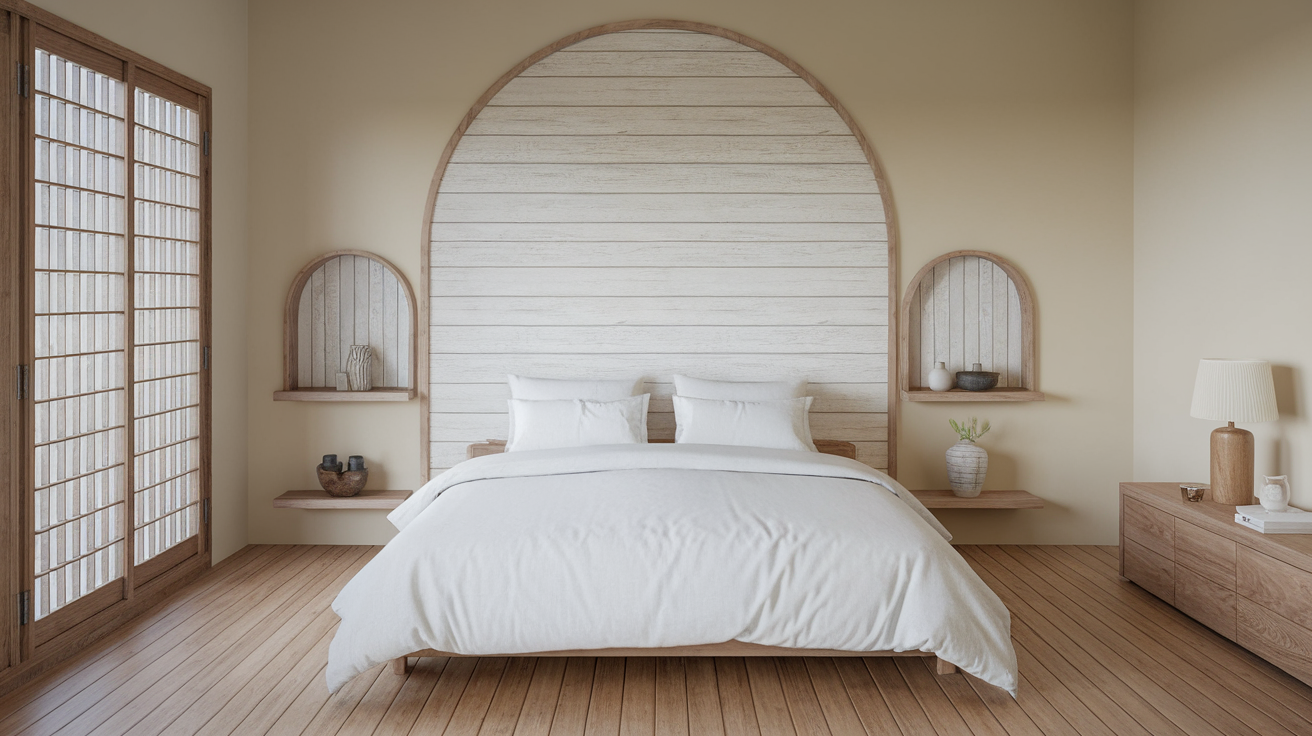
A low wooden platform bed merges both. Go for natural wood frames with clean lines, no heavy headboards, and definitely no clutter underneath. Pair with neutral bedding, and you’ve already set the tone for serenity.
2. Neutral Color Palette with Warm Undertones
Japandi bedrooms thrive on a neutral palette: beige, taupe, stone gray, ivory, and soft whites. But here’s the secret sauce—avoid sterile whites. Instead, add warm undertones. Think sandy beige or creamy ivory instead of stark white.
Why? Because while minimalism calms the mind, warmth makes the heart feel at home. Scandinavian design prioritizes coziness (aka hygge), and Japanese interiors are rooted in natural harmony. Together, they make your bedroom a canvas of peace.
3. Layered Textures Instead of Loud Colors
Since Japandi avoids bold splashes of color, texture takes the spotlight. Introduce linen bedding, cotton throws, wool rugs, and bamboo accents. Imagine the tactile pleasure of soft linen against your skin or the comfort of a handwoven rug under bare feet.
This layered texture approach ensures your space doesn’t feel flat or cold, even if the color scheme is restrained.
4. Natural Light as the Primary Decor
Forget chandeliers or heavy lighting. In Japandi bedrooms, natural light is the hero. Large windows with sheer curtains let in soft daylight, mimicking a warm embrace.
If your room lacks big windows, use paper lantern lamps or warm LED bulbs that imitate natural glow. This keeps the room feeling fresh and inviting instead of harsh and artificial.
5. Declutter with Purposeful Storage
Japandi design says: “If it doesn’t serve you, let it go.” Invest in functional storage: under-bed drawers, floating nightstands, or wall-mounted shelves.
The goal is decluttering without sterility. Unlike some cold minimalist styles, Japandi bedrooms balance function with warmth. Think woven baskets instead of plastic bins, and solid wood nightstands instead of metal racks.
6. Low Seating for a Zen Vibe
Add a low bench or a floor cushion corner. This nods to traditional Japanese tatami seating while also appealing to Scandinavian coziness.
It can double as a meditation corner or a cozy reading nook. Imagine curling up with tea and a book, sitting close to the earth, fully grounded—that’s Japandi peace in action.
7. Indoor Plants for Natural Balance
Japanese design honors nature, and Scandinavian homes embrace greenery to combat long winters. That’s why plants are essential in Japandi bedrooms.
Choose low-maintenance greenery like snake plants, bamboo, or peace lilies. They purify the air and add a calm visual balance. Avoid overcrowding; a few well-placed plants work better than a jungle.
8. Sliding Doors or Shoji Screens
Traditional Japanese homes use sliding shoji screens, while Scandinavian homes love open, airy spaces. Combine the two by using sliding closet doors or partitions with wooden frames and frosted glass.
They save space, maximize light flow, and add that signature Japandi look—light, functional, and elegant.
9. Minimalist Artwork with Organic Touch
Japandi walls aren’t filled with bold art. Instead, use minimalist prints, calligraphy, or line drawings. Stick to earthy tones or black ink on white paper.
For personality, add handcrafted pottery or ceramics on shelves. These organic pieces celebrate imperfection, a Japanese concept called wabi-sabi, which finds beauty in flaws.
10. Neutral Rugs for Grounding
A bedroom without a rug can feel unfinished. In Japandi style, rugs are neutral, textured, and natural. Think jute, sisal, or wool rugs.
Instead of busy patterns, opt for solid tones or subtle weaves. Place it under the bed to anchor the space—like drawing a calm circle of balance around where you sleep.
11. Earthy Accent Walls
Painting your walls bright colors? Not in Japandi. Instead, choose earthy accent walls—like a clay-textured wall, muted olive green, or warm terracotta.
These tones ground the space while adding quiet depth. For a DIY touch, try limewash paint, which creates soft, cloudy textures that feel natural and timeless.
12. Layered Bedding for Cozy Minimalism
Even minimalists need comfort. Go for layered bedding: a light linen duvet, a cotton throw, and a wool blanket at the foot of the bed.
Stick to neutral tones, but layer different shades—ivory sheets, taupe blanket, beige throw. It looks inviting yet still minimal.
13. Wooden Nightstands with Character
Japandi favors furniture that feels natural and handmade. Skip glossy finishes and go for matte, raw, or lightly stained wood.
Your nightstand doesn’t have to match the bed perfectly. Instead, let it have its own character—maybe a vintage wooden stool or a handcrafted bamboo table.
14. Warm Lighting with a Soft Glow
Lighting sets the mood. Use paper lanterns, rattan pendants, or soft table lamps with warm bulbs.
Avoid harsh white light—it kills the serenity. The goal is a soft, golden glow, like a cozy sunset wrapped inside your bedroom.
15. Wabi-Sabi Decor Accents
Japandi isn’t about perfection. Add decor that celebrates imperfection and nature’s raw beauty. Think cracked ceramic vases, handwoven baskets, or uneven wooden bowls.
This is wabi-sabi living: appreciating life’s flaws instead of hiding them. It gives your space authenticity.
16. Cozy Scandinavian Throws
Japandi bedrooms might lean minimal, but they don’t ignore comfort. Add a chunky knit throw or a soft fleece blanket.
These Scandinavian touches keep the room from feeling too bare while still blending seamlessly with neutral tones.
17. Floating Shelves with Purpose
Instead of heavy bookcases, go for floating shelves. Keep them styled with purpose: one or two books, a plant, a small vase.
Overloading them ruins the calm. Think quality over quantity—a Japandi golden rule.
18. Natural Flooring Choices
Your floor matters as much as your bed. Choose light oak wood, bamboo, or neutral-toned laminate.
Cover with woven rugs for warmth. The combination of wood + textile is a Japandi must-have—it balances Scandinavian coziness with Japanese simplicity.
19. Hidden Tech for a Distraction-Free Zone
Japandi bedrooms are about peace of mind, and nothing ruins that like cords and gadgets everywhere. Hide your chargers in woven baskets, keep the TV out of the bedroom, and use discreet wireless lamps if possible.
The less visible tech, the more your space feels like a retreat instead of an office.
20. A Reading Corner with Minimal Decor
If you’ve got extra space, create a Japandi reading nook. Use a low wooden chair with linen upholstery, add a soft blanket, and place a small floor lamp nearby.
Keep decor to a minimum—a plant, a small side table, maybe one piece of art. This corner becomes your peaceful getaway within your bedroom.
21. Balanced Symmetry Around the Bed
Symmetry is calming. Place matching lamps, rugs, or nightstands on either side of the bed.
But don’t make it too rigid. You can add small differences, like different decor on each nightstand. Balance is key—not perfection.
22. Scent and Atmosphere for the Final Touch
Japandi isn’t just visual; it’s about atmosphere. Use natural scents like cedarwood, lavender, or sandalwood with essential oil diffusers or incense.
Scents directly affect mood—studies show that lavender reduces anxiety and improves sleep quality. Add a touch of fragrance, and your bedroom transforms into a full sensory retreat.
Conclusion
A Japandi bedroom is not just a design choice—it’s a lifestyle shift. It’s about stripping away excess, celebrating nature, and embracing calm. By combining the clean minimalism of Japan with the warm coziness of Scandinavia, you create a bedroom that’s both stylish and deeply restorative.
If you implement even a few of these , you’ll notice your space feels lighter, calmer, and more grounding. Your bedroom will no longer just be a place where you sleep—it’ll become your personal Zen oasis, a retreat where your soul can rest.