22 Long Narrow Living Room Ideas That’ll Transform Your Space (You Won’t Believe #10!)
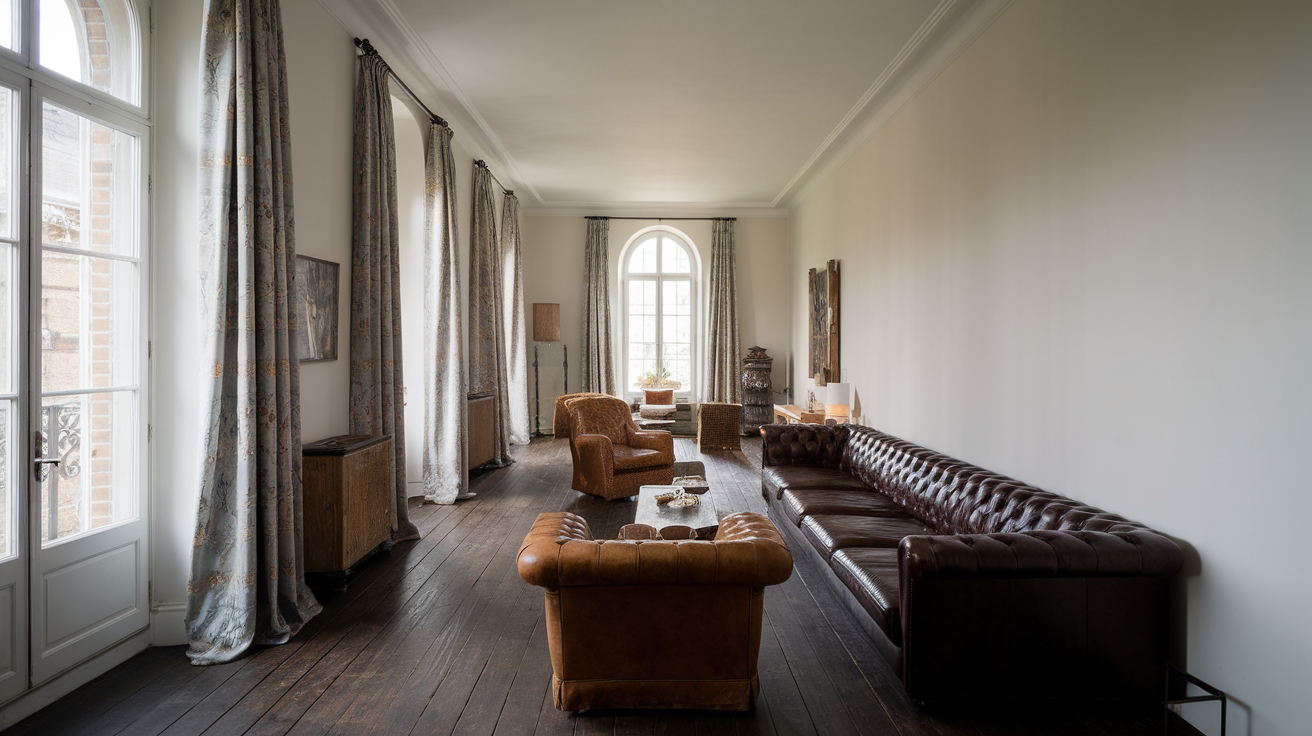
Designing a long narrow living room feels a lot like trying to fit a queen-sized bed into a shoebox—you know it can work, but you’ll need strategy, patience, and a touch of creativity.
The biggest challenge? Balancing function and style without making the room feel like a bowling alley.
I’ve spent countless hours reworking tricky layouts for friends (and my own home), and trust me—once you crack the code, these spaces can become some of the most stylish and functional rooms in the house.
Below, I’ll walk you through 22 practical, stylish, and game-changing ideas to make your long narrow living room not just work—but shine.
1. Embrace a Symmetrical Layout
Symmetry is like that friend who always brings balance to your group chats.
By placing two sofas facing each other or creating mirrored zones with identical chairs, you trick the eye into feeling harmony in a narrow space.
A balanced layout makes the room feel intentional rather than awkwardly stretched. For extra effect, keep the center open with a slim coffee table.
2. Use Rugs to Define Zones
One long rug will emphasize the length of your room, which you don’t want. Instead, break up the space with multiple area rugs.
A rug under the sofa defines the lounging zone, while another rug closer to the dining table or reading nook separates those areas.
Rugs are visual anchors, and in long rooms, you need multiple anchors to ground the layout.
3. Float the Furniture Away from Walls
I know the first instinct is to push everything against the wall, but that’s a trap. Pull your sofa slightly into the room and create a walkway behind it.
This instantly makes the space feel cozier and less like a hallway. Even floating a console table or bench behind your sofa gives purpose to the “extra” floor space.
4. Break the Room Into Two Living Areas
Think of your long living room as a multi-purpose tool, not just a single space.
Use one half as a formal sitting area and the other half as a casual family zone, library corner, or even a small workspace.
By dividing the room visually (using rugs, furniture, or lighting), you create multiple functional zones instead of one never-ending strip.
5. Choose Slim, Streamlined Furniture
Bulky sectionals will swallow your narrow space faster than a toddler with candy.
Instead, opt for slender sofas, armless chairs, and slimline coffee tables.
Look for pieces that are raised on legs rather than heavy bases—this adds airiness and makes the room feel less cramped.
6. Use Vertical Storage and Tall Shelving
If the width isn’t working for you, go vertical. Tall bookshelves, wall-mounted cabinets, and vertical art pieces draw the eye upward, balancing out the length.
This trick is especially useful in homes with high ceilings, where you can make the walls do the heavy lifting in terms of storage and style.
7. Layer Your Lighting
Lighting is the secret sauce to cozy rooms. Instead of one lonely ceiling light, use a mix of floor lamps, sconces, and table lamps along the length of the room.
This spreads illumination evenly and prevents one area from feeling like a spotlight stage while the rest sulks in darkness.
8. Add a Console Table for Flow
A console table placed along one wall (or behind a sofa) works wonders.
Not only does it give you a place to set down drinks, books, or decor, but it also creates a visual pause in the length of the room.
Consider narrow consoles or floating shelves if space is especially tight.
9. Play with Different Seating Arrangements
Don’t assume your sofa has to run the length of the room. Try placing two loveseats facing each other, or a sectional that curves slightly.
Adding a mix of chairs, stools, and benches creates flexibility and breaks the monotony of a one-direction layout.
10. Use Mirrors Strategically
Here’s the game-changer. Mirrors, when placed on side walls, make a narrow room appear wider.
Positioning a large mirror opposite a window also doubles the light in the room.
I once helped a friend hang a giant vintage mirror along her narrow living room wall, and she texted me the next day: “It looks like my living room had a baby—it doubled overnight!”
11. Consider Built-In Furniture
Built-ins, like wall-to-wall shelving or custom benches, maximize every inch of a long narrow room.
They give you storage, display areas, and style while keeping furniture aligned with the space’s shape.
Built-ins also reduce the visual clutter of too many standalone pieces.
12. Add Architectural Details
Crown molding, wainscoting, or even a bold accent wall can add dimension to a room that feels too linear.
These details trick the eye into seeing texture and depth, distracting from the long, narrow proportions.
13. Create a Focal Point
Without a clear focal point, a long room feels like a corridor. This could be a fireplace, a large piece of artwork, or even a gallery wall.
Orient your furniture to face this main attraction, and suddenly, the room feels anchored rather than stretched.
14. Use Round and Oval Furniture
Round coffee tables, oval rugs, and circular ottomans soften the straight, narrow lines of the room.
They introduce curves, which naturally break up the visual length. It’s like sprinkling in a few unexpected dance moves during a slow waltz—it keeps things interesting.
15. Paint the Short Walls Darker
If you paint the shorter walls (the ones at each end) a darker shade than the longer walls, you visually shorten the room.
This simple paint trick works like magic, making the proportions more balanced. Pair this with light-colored long walls to reflect brightness.
16. Use Sliding Doors Instead of Hinged
If your long narrow living room connects to other spaces, hinged doors eat up valuable square footage.
Replace them with sliding barn doors, pocket doors, or glass sliders. They save space while also adding character.
17. Incorporate Multi-Functional Furniture
Think ottomans with storage, nesting tables, or a sofa bed.
Dual-purpose furniture reduces clutter and lets you adapt the space to different needs without overwhelming the room with too many pieces.
18. Maximize Windows and Natural Light
If you’re blessed with windows, keep them uncovered or use light, airy curtains. Heavy drapes will close in the space.
Natural light instantly makes long narrow rooms feel wider and more breathable.
19. Use Artwork to Shorten the Space
Hang large artwork or create a gallery wall on the shorter ends of the room. This draws the eye toward those walls, visually shortening the length.
Vertical artwork on side walls also helps add balance.
20. Incorporate a Sectional—But Smartly
Yes, sectionals can work in narrow rooms if you choose wisely. Go for an L-shaped sectional with a slim profile, placed in a corner.
This creates cozy seating without cutting off the flow.
21. Keep Pathways Clear
Nothing screams awkward like a cramped walkway. Always leave clear traffic routes through the room.
If people have to zig-zag around furniture, the room feels cluttered and smaller. Float furniture or angle pieces slightly to improve flow.
22. Mix Textures and Layers
A narrow room needs depth. Use layered textiles—throw blankets, cushions, woven rugs, and curtains—to add coziness. Mix wood, metal, and fabric finishes for visual richness.
The variety keeps the room engaging and less focused on its shape.
Conclusion
Long narrow living rooms may seem like design puzzles, but with the right approach, they become opportunities for creativity.
From symmetry and zoning to mirrors and multi-functional furniture, these 22 ideas prove you don’t need to sacrifice style for function.
Think of your room not as a problem but as a blank canvas—one that simply requires a different brushstroke.
And yes, about #10—mirrors really do work like magic. You won’t just believe it; you’ll see it every time you walk in and wonder how your once “bowling alley” space suddenly feels like a chic lounge.